Durban,KwaZulu-Natal
Infrastructure inspection and policy reform take centre stage at Durban School for the Hearing Impaired.
The KwaZulu-Natal MEC for Public Works and Infrastructure, Martin Meyer, today, Thursday, 15 January, led a Back-to-School Programme at the Durban School for the Hearing Impaired in Amanzimtoti, reaffirming the department’s commitment to inclusive and accessible education for learners living with disabilities.
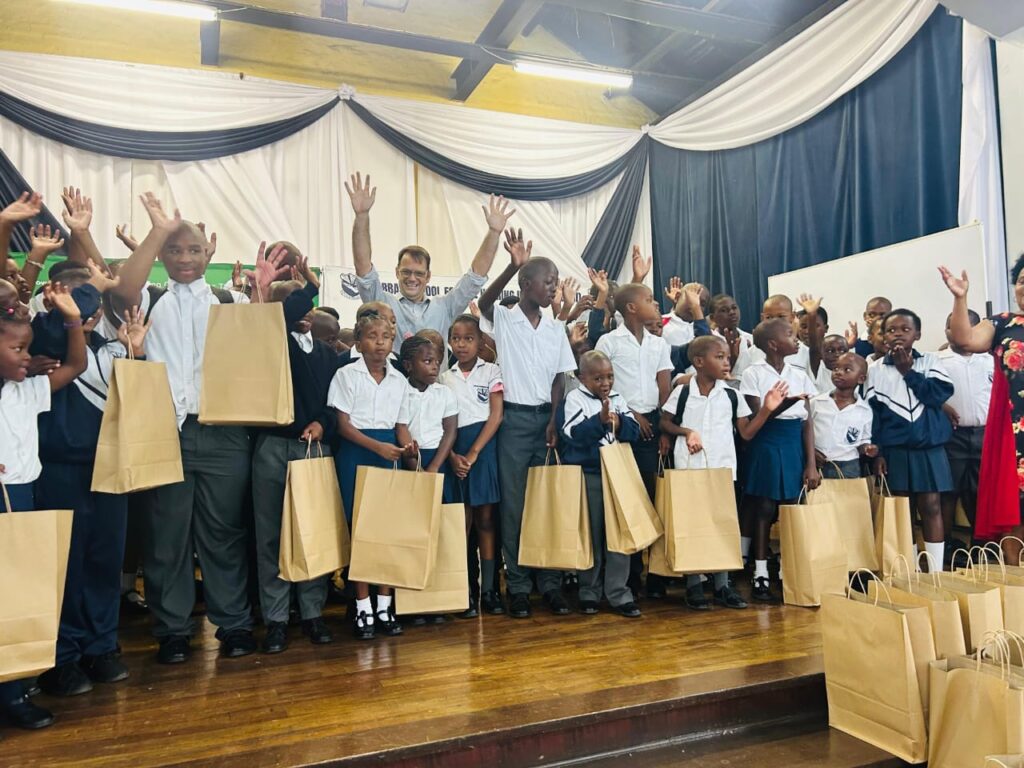
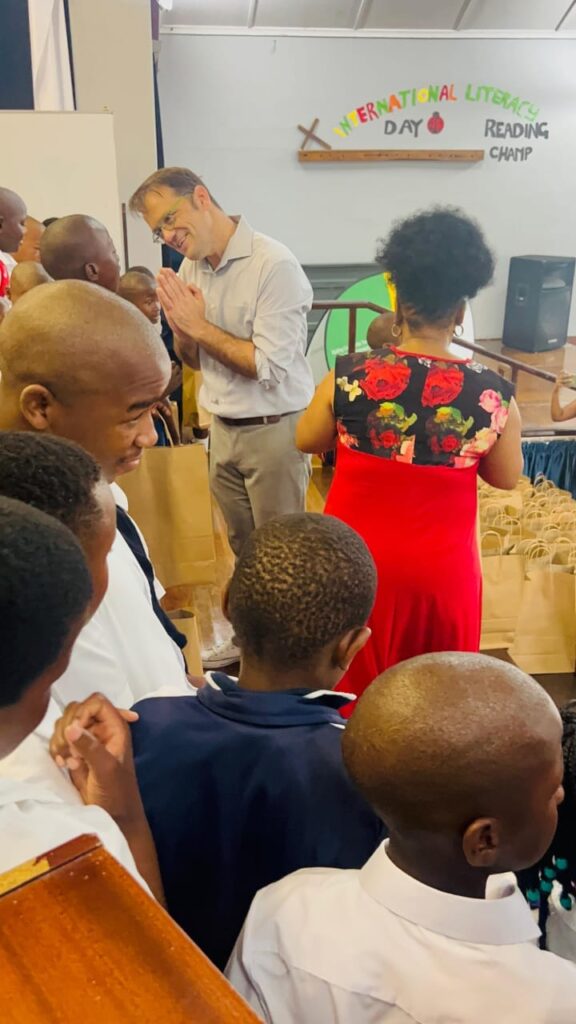
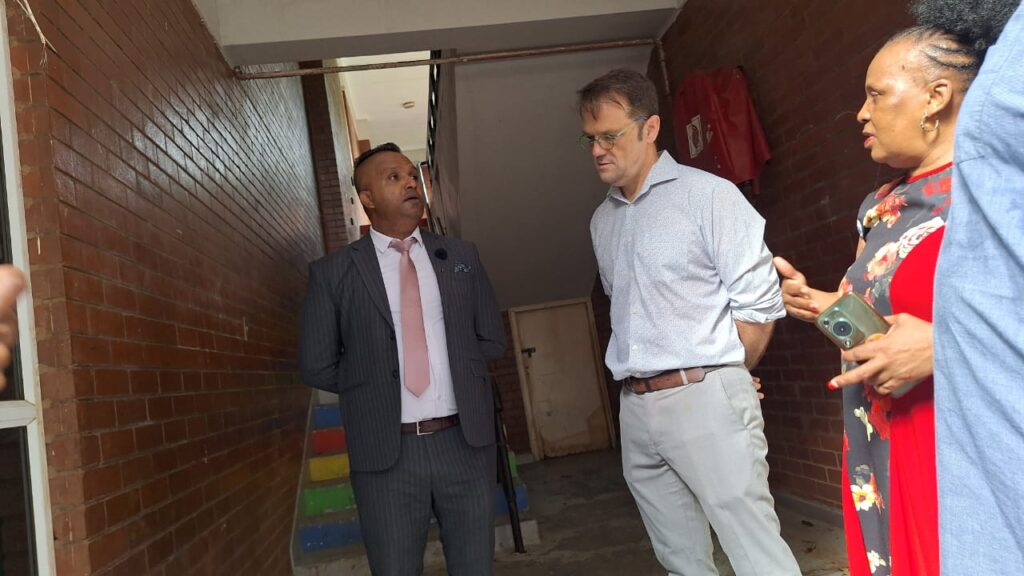
The visit formed part of the department’s ongoing efforts to ensure that school infrastructure supports equal access to learning, particularly for first-time pupils with disabilities. During the programme, MEC Meyer inspected disability-friendly facilities designed to improve mobility and access within the school environment. He also presided over a stationery handover ceremony, providing essential learning materials to support learners as they begin the academic year.
The Durban School for the Hearing Impaired, renowned for its consistently strong academic performance, holds special significance for MEC Meyer, having been formally adopted by him. The school remains a valued institution where resilience, excellence, and opportunity intersect, reflecting the transformative power of education when supported by inclusive infrastructure.

During the visit, MEC Meyer highlighted a critical financial challenge affecting schools across KwaZulu-Natal which is the payment of municipal rates on public school properties. He noted that the department has faced severe challenges in this regard, including ongoing engagements with municipalities such as eThekwini, and emphasised that improving these relationships would be a key focus area for the year ahead.
KwaZulu-Natal remains one of the few provinces in South Africa where government is required to pay municipal rates on schools. With the province responsible for thousands of public school properties, many of which are large institutional sites, the cumulative cost of municipal rates runs into hundreds of millions of rands annually. These costs place significant pressure on education and infrastructure budgets, diverting resources away from learner support, facility upgrades, and service delivery.
Referring to the size and location of the Durban School for the Hearing Impaired in Amanzimtoti, MEC Meyer explained that properties of this nature attract substantial rates. He questioned how education can be prioritised when significant public funds are directed toward paying rates, while other organisations and entities within municipalities benefit from zero-rated or reduced tariffs.
The MEC announced that the Department of Public Works and Infrastructure has begun engagements with Cabinet and will be intensifying discussions with the South African Local Government Association (SALGA) and the Department of Cooperative Governance and Traditional Affairs (COGTA). The objective is to secure zero-rating, or at the very least reduced municipal rates, for public schools across KwaZulu-Natal.
He stressed that the department cannot be expected to spend millions of rands simply to keep lights on and doors open at schools, when those funds could be redirected toward improving the quality of education, expanding inclusive infrastructure, and supporting learners and educators.
As the implementing agent and custodian of public school infrastructure, the Department of Public Works and Infrastructure reaffirmed its responsibility to create environments where future leaders are nurtured. Beyond the construction and maintenance of facilities, the department’s broader mandate includes advocating for policy interventions that protect education funding and ensure equitable access to learning for all pupils, including those who are differently abled.
MEC Meyer concluded by reiterating the department’s commitment to ensuring that communities across KwaZulu-Natal continue to benefit from infrastructure investment that is both sustainable and people-centred. He confirmed that addressing the issue of municipal rates on schools will be a key priority for the department in the year ahead, as part of its efforts to bring about meaningful change and secure a better future for the province’s learners.