

South Coast, KwaZulu-Natal
Minister of Public Works and Infrastructure (DPWI) Dean Macpherson transfers management of coastal assets to MEC Martin Meyer for long-term leases, tourism investment and province economic revitalisation
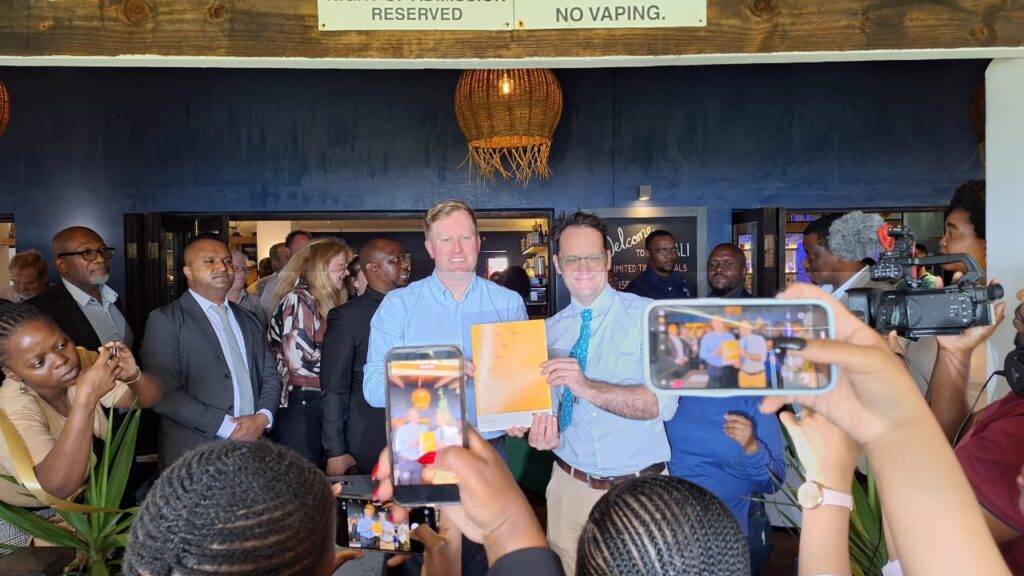
On Monday, 10 November 2025, the Department of Public Works & Infrastructure (DPWI) under Minister Dean Macpherson formally handed over the management and administration of 15 strategically located properties along the South Coast of KwaZulu-Natal to the provincial department headed by KwaZulu-Natal MEC for Public Works & Infrastructure Martin Meyer.
Situated along the “Admiralty Reserves” corridor between Hibberdene and Port Edward in the Ray Nkonyeni Local Municipality area, the 15 properties have strong tourism potential. However, the existing 20-year agreement (signed in 2016) between the national department and the municipality to manage the leases of these assets was not being consistently or transparently administered. Businesses occupying the sites were often placed on short-term or monthly leases during 2021-2023, making it difficult for them to invest in upgrades or guarantee job stability.
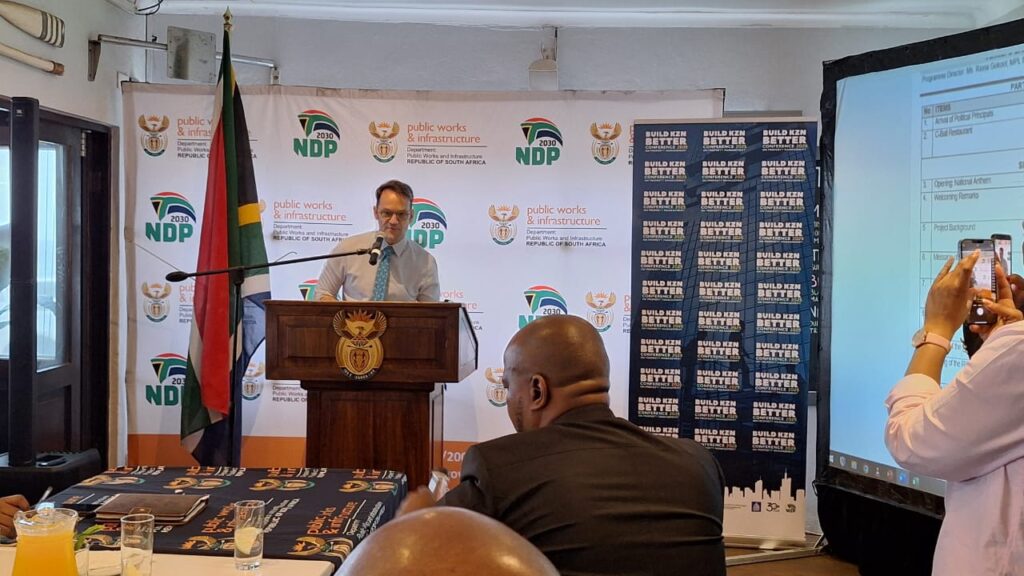
Faced with concerns around unfair leasing practices, lack of responsiveness, ownership disputes and the municipality advertising properties for tender without resolving those issues, the national department invoked its right to terminate the prior agreement (effective 3 August 2025) and instructed the municipality to stop advertising the properties. With this hand-over, the provincial department is now tasked with establishing a more stable leasing framework, encouraging investment, and enabling job creation.

Minister Macpherson emphasised that the move is part of his commitment to ensure state land and assets are used for the public good — not standing idle, but actively contributing to community upliftment and economic growth. He said the transfer will allow long-term leases and thereby give business owners certainty to invest in their facilities and create sustainable jobs.
MEC Meyer underscored the job creation angle: unemployment in the municipality stands at about 37 %, tourism already contributes around 16.9 % of the economy in Ugu district — so leveraging these properties to boost tourism, local businesses and employment is a central aim. He called for stakeholders — local community members, business associations (including Federated Hospitality Association of South Africa (Fedhasa) — to partner with government to make this new phase a success.
By providing longer-term leases and clearer management, businesses operating on these properties (especially in tourism, hospitality, recreation) will have the confidence to upgrade, expand and hire more staff.
The revitalised leasing regime will help spur local investment — infusion of capital into the infrastructure, amenities, services which accompany tourism operations.
The properties themselves can act as anchors for regeneration of the coastal belt: improving aesthetic appeal, attracting visitors, increasing demand for local services (accommodation, food, transport, retail) — all of which can create jobs, including opportunities for local entrepreneurs.
Given the existing high unemployment in the area, such public asset-led initiative can be catalytic: using state-owned land not just as liabilities but as assets generating economic value and employment. (This aligns with broader policy by DPWI and KZN to unlock under-utilised public assets for community benefit.)

However, the hand-over has not been without criticism or risk. The Ray Nkonyeni Municipality has criticised the move, alleging that proper protocol and cooperation were not followed, and raised concerns about unilateral decision-making and the potential marginalisation of local government’s role.
Ensuring that the newly-transferred properties are managed transparently, leased fairly, and that local businesses (including previously-disadvantaged operators) benefit — not just large players — will be key. Monitoring job creation, local procurement, community benefit will be important to demonstrate the impact.
The provincial DPWI (KZN) will now assume responsibility for lease administration of the 15 properties. Minister Macpherson and MEC Meyer indicated that new long-term leases should be concluded as soon as possible so that investment can begin and jobs can be generated.

Business owners previously operating on short-term leases should be supported in transitioning to stable lease agreements so they can commit to repairs and upgrades (one example used: a coastal establishment that went under because the owner could not commit to repairs without a secure lease).
Ongoing collaboration with tourism-sector stakeholders and local community groups will be required, as noted by MEC Meyer.
The model could be used more widely: similar property transfers and unlocking of unused public assets is underway in KZN and other provinces — e.g., an audit revealed over 10,000 under-utilised state-owned properties in KZN to be released for economic use.
The hand-over of 15 coastal properties from the national DPWI to the KZN provincial DPWI marks a significant step in repositioning state-owned assets as drivers of economic growth, rather than dormant liabilities. By enabling long-term leases, encouraging investment, and linking to tourism and hospitality sectors, the initiative offers tangible promise for job creation on the South Coast. The success of this scheme will depend on effective implementation, equitable leasing practices, local business participation and community benefit. If managed well, this could serve as a blueprint for other regions in South Africa seeking to harness dormant public assets for inclusive growth.
“I want to make it very clear – this is all about jobs. Ray Nkonyeni Municipality sits with 37% unemployment . Tourism brings in 16.9% in general value to the economy of Ugu District. As KZN Public Works and Infrastructure we are very excited to partner with our national counterpart to achieve this and we ask the members of the community, coucillors, FEDHASA and other stakeholders to walk this path with us as it is new, but I am more encouraged by the prospects of tourism and the number of people who will come from the other provinces to enjoy South Coast as they witness it being restored to its former glory,” said MEC Meyer.
Have any thoughts on this story? Drop us a comment below, we would love to hear from you!